
First Trimester: Baby's Sense of Touch
Mar 24, 2025
Rita Singha
Pregnancy Health
Touch is the first sense your baby develops, starting as early as week 8 of pregnancy. It begins with touch receptors forming around the lips and nose, then gradually spreads to the hands, feet, and eventually the entire body by week 13. This process is essential for your baby's survival reflexes, like swallowing and grasping, and plays a key role in brain and nervous system development. Early tactile experiences, such as feeling amniotic fluid or the uterine wall, help shape the brain's sensory pathways.
Key Points:
Week 8: Touch sensitivity starts around the lips and nose.
Weeks 10–12: Sensitivity extends to palms and soles.
Week 13: Full-body touch sensitivity develops, with over 50 movements per hour.
Simple activities like gentle belly touches, rhythmic movements, and managing stress can support this development. Skin-to-skin contact after birth further strengthens this sense, stabilizing oxygen levels and releasing oxytocin, the "love hormone." Understanding these milestones highlights how active and aware your baby becomes even in the first trimester.
Touch Development Timeline in the First Trimester
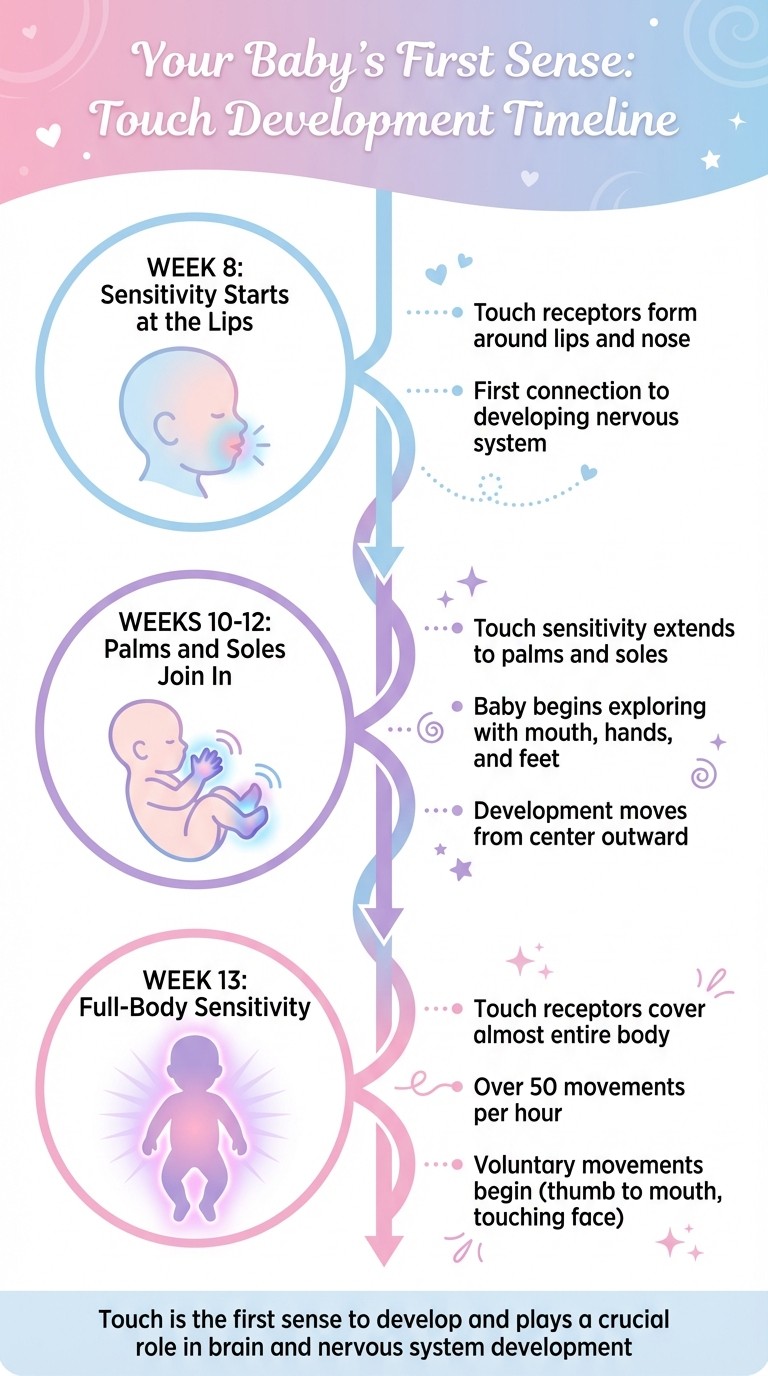
Baby's Touch Development Timeline: Weeks 8-13 of Pregnancy
Your baby's sense of touch begins developing early in the first trimester, starting at the face and gradually extending outward. Understanding this week-by-week progression gives insight into how quickly your baby starts interacting with their surroundings.
Week 8: Sensitivity Starts at the Lips
By week 8, touch receptors start forming on the face, particularly around the lips and nose. These receptors connect to the developing nervous system, laying the groundwork for early sensory experiences.
Weeks 10–12: Palms and Soles Join In
Between weeks 10 and 12, touch sensitivity extends from the face to the palms of the hands and the soles of the feet. This development follows a pattern that moves from the center of the body outward. By week 11, your baby begins to explore their tiny world using their mouth, hands, and feet. Although these movements are too subtle to feel, they mark an important step in sensory development. By week 13, this expansion sets the stage for more coordinated touch responses.
Week 13: Full-Body Sensitivity
By week 13, touch receptors cover almost the entire body. Your baby may begin to show both voluntary and involuntary movements, like bringing a thumb to their mouth or touching their face. Studies suggest that by this point, your baby could be moving over 50 times an hour, showcasing an active response to touch. While the sense of touch is well-developed by this stage, the pathways needed to process pain won’t fully mature until around week 24.
The Science Behind Touch Development
Formation of Touch Receptors
Touch receptors, or mechanoreceptors, begin their journey from neural crest cells. These cells migrate from the neural tube during early development and eventually form the dorsal root ganglia (DRG) - the cornerstone of your baby's sensory nervous system.
Once established, these receptors extend in two directions: outward to the skin and inward to the spinal cord and brain. This dual connection ensures that tactile signals are transmitted quickly and efficiently. The skin, which makes up about 16%–18% of the body's mass, is packed with mechanoreceptors that translate pressure into electrical signals. This intricate network sets the stage for how the brain will later interpret touch.
How Touch Stimulates Brain Development
Touch doesn't just connect the skin to the brain - it actively shapes the brain's structure. The thalamus, a deep brain region, plays a key role in this process. Instead of merely passing along information, it generates spontaneous electrical activity that helps organize the somatosensory cortex even before external touch is experienced.
"Our data reveal that the embryonic patterns of electrical activity of the thalamus... organize the architecture of the cortical somatosensory map. The development of this map involves the emergence of functional cortical columns in embryos, driven by activity in the form of waves that spontaneously propagate through the thalamus." - Guillermina López-Bendito, Researcher, Spanish National Research Council (CSIC)
This activity creates a detailed somatosensory map - a system that links specific body regions to corresponding areas in the brain. This map allows your baby to pinpoint where touch occurs on their body. Beyond that, touch acts as a "sensory scaffold", laying the groundwork for other senses like vision and hearing to develop. Early tactile experiences, such as the sensation of amniotic fluid, play a critical role in stimulating the growth of the nervous system, including the brain and spinal cord.
How Expectant Mothers Can Support Touch Development
Gentle Belly Touches and Rhythmic Movements
From the earliest stages of pregnancy, gentle belly touches can help support your baby's developing sense of touch. Soft, circular motions on your abdomen not only strengthen the bond between you and your baby but also encourage the growth of their somatosensory system as it begins to form.
Rhythmic movements, like those from a simple morning walk, also play a role. The gentle sway of your body creates subtle shifts in the womb, stimulating your baby's tactile responses. By around week 13, your baby might even start bringing their thumb to their mouth, exploring their surroundings in their own way. These small, natural movements are a great complement to other activities that promote healthy fetal development.
Relaxation Techniques to Reduce Stress
Your emotional well-being is just as important for your baby's touch development as physical stimulation. Affectionate belly touches combined with stress management can help protect your baby from the negative effects of prenatal stress. Especially during the first trimester, getting enough rest is key to supporting their growth.
Mindfulness and relaxation techniques can further enhance your baby's developing sensory system. Try Constructive Rest by lying on your back with your knees bent, allowing them to touch naturally. Hug your arms across your chest and take 20 slow, deep breaths to release tension in your lower back. If morning sickness is making things difficult, the Child's Pose can be a soothing alternative. Rest your forehead on a block and stay as long as you need. These practices not only help you feel better but also aid in your baby's nervous system development.
How Rita's Pregnancy 101 Can Help
Rita's Pregnancy 101 provides a range of tools and resources to support your baby's sensory development right from the beginning. By focusing on early tactile stimulation, the program helps you nurture your baby's growth in meaningful ways.
Trimester-Specific Guidance for Sensory Development
The program offers trimester-specific sessions that explain your baby's touch development milestones and their significance for the future. As your baby's sensory system forms, these sessions provide tailored support to reinforce these crucial early stages.
Through live expert-led sessions, you'll learn how everyday actions - like managing stress and incorporating gentle movements - can positively impact your baby's developing nervous system. These insights are paired with integrated prenatal practices to help you create a nurturing environment.
Prenatal Yoga and Meditation
Prenatal yoga classes not only enhance your well-being but also play a role in your baby's sensory growth. Gentle movements during yoga create a calming rocking effect in the amniotic fluid, which stimulates your baby's touch and balance systems. Guided meditation helps you manage stress, fostering a more stable environment for your baby's nervous system.
The classes include restorative poses tailored to the first trimester, helping you combat fatigue and nausea while supporting early development of touch receptors. With a flexible live class schedule and ongoing online support, you’ll have access to guidance whenever you need it.
Garbh Sanskar for Complete Care

Garbh Sanskar sessions take a more holistic approach to prenatal care. They focus on "uterine learning", where sensory stimulation helps shape your baby's central nervous system.
The P101 Complete Care program, priced at approximately $30/month, combines a range of prenatal practices - yoga, meditation, trimester-specific guidance, and more. This comprehensive approach ensures you have the support you need to promote your baby's development during this critical phase, with continuous online assistance throughout your journey.
Supporting Your Baby's First Sense
Touch is the first sense your baby develops, beginning as early as week 8 of pregnancy. This early sensory system plays a key role in signaling the brain and spinal cord to grow and mature. As Jamie Morgan, M.D. from UT Southwestern Medical Center explains, "Much of this forms the basis of the infant's early attachment to the mom and begins the long process of its learning about the postnatal world."
During the first 13 weeks, your baby’s touch sensitivity evolves rapidly. It starts around the lips and progresses to full-body responsiveness by week 13. These touch receptors are vital for triggering life-sustaining reflexes, like swallowing, which is prompted by the sensation of amniotic fluid in the throat. These milestones are not just markers of early growth - they also set the stage for how your baby will experience and interact with the world.
What you do during the first trimester matters more than you might realize. Research shows that simple acts like affectionate touch and staying relaxed can shield your baby from the effects of prenatal stress, promoting healthy emotional development.
Touch is also deeply tied to cognitive growth. Blair A. Jenkins from Columbia University emphasizes, "Tactile stimulation is required for normal cognitive development in mammals." This connection underscores how important it is to support your baby’s sense of touch right from the start.
FAQs
How does my baby's sense of touch develop during the first trimester, and why is it important?
Your baby's sense of touch starts forming surprisingly early - right in the first trimester. By about 8 weeks of pregnancy, touch receptors begin to develop, starting on the lips and nose. Over time, these receptors expand to the hands, feet, and eventually other parts of the body. By the second trimester, your baby can already react to sensations like pressure and changes in temperature.
This early development of touch is essential for your baby's future ability to explore and make sense of their surroundings. A strong sense of touch not only supports emotional bonding but also helps with recognizing different textures and contributes to motor skills like coordination and balance. These early tactile experiences in the womb lay the groundwork for how your baby will interact with the world after birth.
How can I help support my baby's sense of touch during the first trimester?
Your baby’s sense of touch begins to form surprisingly early - around 7 to 8 weeks into pregnancy. By the end of the first trimester, this sense continues to grow and refine. One way to encourage this development is by gently touching or caressing your belly. These soft gestures can help stimulate your baby’s developing sensory receptors while also creating a sense of connection.
Adding your voice to these moments can make them even more meaningful. Whether you speak softly, hum, or sing, combining touch with sound helps strengthen the emotional bond between you and your baby. These simple, loving actions not only provide comfort but also support your baby’s sensory growth during this important stage of development.
Why does a baby’s sense of touch develop first during pregnancy?
A baby's sense of touch is the first to develop, as it plays a key role in their growth and ability to connect with the world. By about 8 weeks of gestation, sensory receptors for touch start forming. This process begins on the face and gradually spreads to other parts of the body. These early developments allow the baby to start responding to their surroundings and support both physical and neurological growth.
By the end of the first trimester, babies can sense gentle pressure and movement. This ability lays the groundwork for how they will explore and interact with the world after birth. Recognizing these milestones gives expectant mothers a deeper appreciation for the remarkable progress happening during these early stages.